
Compassionate Women’s Health & Care
Dr Rahel Kader is a dedicated female obstetrician and gynaecologist at Melomed Gatesville. She is a trusted choice for women’s healthcare. Whether you are in need of routine gynaecological check-ups, pregnancy care or specialised treatment, Dr Kader is here to support you.

Some of the services we offer include:
Gynaecology
Family planning is a process that uses birth control methods of contraception to help you plan your family. You can discuss with your partner and doctor when to have children and how many children you want to have. This ensures that you make informed choices about the timing and spacing of your pregnancies to improve the health of you and your baby. Deciding when to have a baby depends on your individual circumstances, such as age, health and personal goals.
A colposcopy is a procedure used to examine the cervix. It’s done to diagnose and check any abnormal changes in the tissues of this area of your body.
During a colposcopy, Dr Kader will use a special instrument called a colposcope to magnify and illuminate the vaginal and cervical tissues. This allows for a detailed and thorough examination. With Dr Kader’s experience and expertise, she will identify any abnormal growths or changes.
Sometimes, your doctor may perform a biopsy (remove a small sample of tissue) which is sent to a lab for further examination and testing.
During the colposcopy procedure, you will be comfortably asleep under anesthesia, ensuring you won’t experience any discomfort or pain. This is a day procedure, meaning you’ll be able to return home the same day, and there’s no need for you to stay in the hospital overnight. Your doctor will discuss any specific preparation or after-care instructions with you before the procedure.
A hysteroscopy is a procedure used to diagnose a condition you might have by allowing your doctor to examine the inside of your uterus.
The procedure involves inserting a thin, lighted instrument called a hysteroscope through the vagina and cervix into the uterus. This allows Dr Kader to view the inside of the uterus and identify any abnormalities or issues.
In some cases, Dr Kader may also perform minor procedures during the hysteroscopy. This can include removing fibroids or correcting a birth defect.
This procedure is performed in theatre under general anaesthesia.
In most cases, it is well tolerated and safe. Dr Kader will discuss any specific preparation or after-care instructions with you before the procedure.
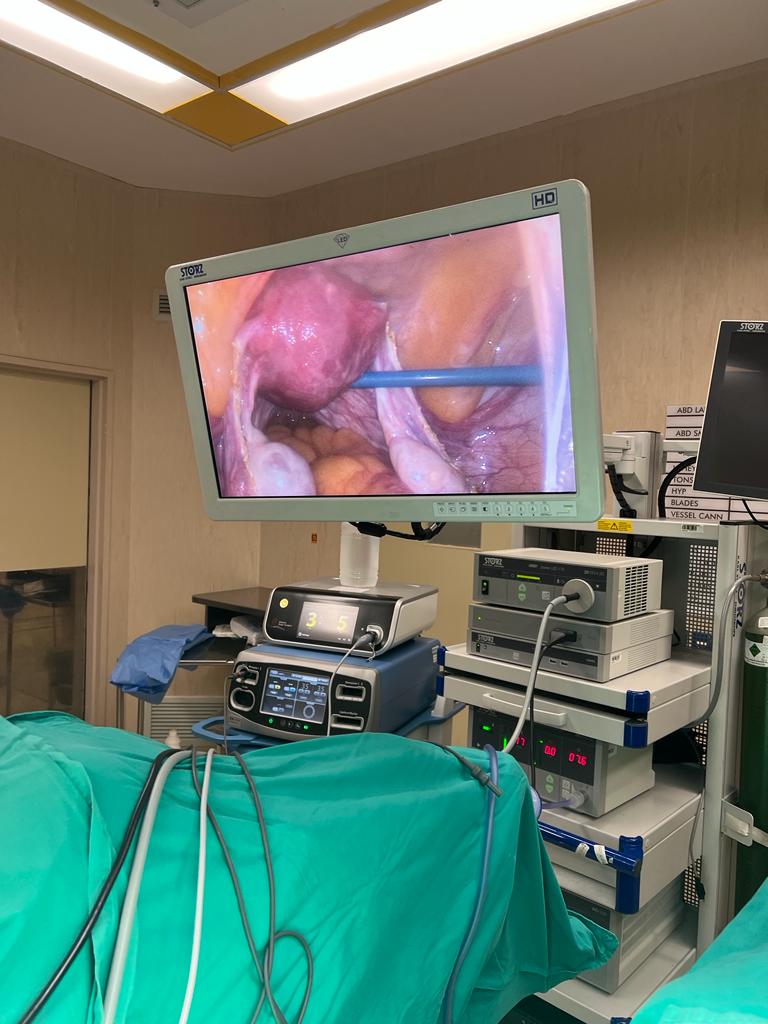
A laparoscopy is a surgical procedure used to examine the abdominal and pelvic organs. A small surgical cut is made, and a long, thin, lighted instrument called a laparoscope is inserted through the abdominal wall. The laparoscope has a camera and light attached to it. This allows Dr Kader to view your internal organs on a screen and perform the necessary surgery.
Laparoscopy is used to diagnose and treat the following:
- Diagnosis and treatment of endometriosis.
- Removal of cysts or tumors from the ovaries or fallopian tube.
- Removal of the uterus or appendix.
- Repair of abdominal or pelvic hernias.
- Removal of fibroids.
- Sterilization by removal of fallopian tubes.
Laparoscopy is performed under general anesthesia, this means that you will be asleep during the procedure. A laparoscopy procedure has many benefits over traditional open surgery. This is a minimally invasive surgery which means that you will have a smaller surgical cut, less pain, shorter recovery time and fewer complications. Patients usually go home on the same day as the procedure. Dr Kader will determine if this procedure is suitable for your specific medical condition, depending on your medical history and other factors.
A pap smear is a screening test used to identify abnormal cells on your cervix. Your cervix is the lower part of your uterus that opens into your vagina. During this test, cells are collected from your cervix and viewed under a microscope. When viewing under the microscope, Dr Kader will be able to see any abnormal changes that could show precancerous or cancerous cells. Abnormal cells found during a pap smear may need further testing to determine the cause of the abnormality and the best course of action.
A pap smear is performed as part of your routine yearly gynaecological exam. This test is recommended for women who are or have been sexually active or are over the age of 21.
Keep in mind that pap smears do not detect all types of cervical cancer and are not a substitute for a pelvic exam or other tests. Remember that early detection of abnormal cervical cells can help prevent the development of cervical cancer. Speak to Dr Kader about your next routine pap smear.
Polycystic ovary syndrome or PCOS is a common hormonal disorder in women of childbearing age.
Symptoms of PCOS include:
- cysts on ovaries,
- irregular periods,
- high levels of male hormones,
- obesity,
- insulin resistance
- infertility
It is important to note that cysts do not have to be present to be diagnosed with PCOS. The cause of PCOS is not known. Speak to your gynaecologist about treatment options which include lifestyle changes and medication.
Ovarian cysts are fluid-filled sacs that develop on or in your ovary. Benign cysts are non-cancerous and usually go away on their own. Pathological cysts may be cancerous and would need treatment depending on their size and the symptoms you experience. Symptoms may include:
- abdominal pain
- bloating
- irregular periods
You may not experience any symptoms at all. Dr Kader can diagnose ovarian cysts using ultrasound or other tests and can recommend the best course of treatment for you.
Menopause is a natural process that occurs in women between the ages of 45 – 55 years of age, although in some cases it can occur earlier or later. It signals the end of your child-bearing years. You may experience:
- hot flashes,
- night sweats,
- vaginal dryness,
- mood swings
- sleep disturbances.
Many of these symptoms will go away on their own. If you are finding it difficult to cope, speak to Dr Kader about treatment options to help you manage and feel better.
Endometriosis occurs when the normal lining of your uterus (endometrium) growing inside your uterus, is found growing outside of it in your pelvic area. This lining breaks down as it does during your menstrual period. The lining then has no way of leaving your body since it is outside of your uterus. This can result in pain, heavy periods, and infertility.
Treatment options include medication to manage pain and hormonal therapy to reduce endometrial growth, as well as surgery to remove endometrial tissue. Speak to Dr Kader about the diagnosis and the best treatment option for you.
Dr Kader understands that some women struggle to maintain a healthy weight at various stages in life. Maintaining a healthy weight is an excellent way to prevent and help manage many lifestyle diseases. If you need help maintaining a healthy weight, speak to Dr Kader about her healthy weight loss program. It involves a course of prescription medication. Dr Kader’s team will monitor your progress and provide personalised support to ensure that you are reaching your weight loss goals. Consultations with a dietician are also included to help you eat a balanced diet and make the best, healthy food choices for you.
Urogynaecology is a specialised field of gynaecology and obstetrics that deals with pelvic floor and bladder related disorders as well as corrective surgery. Dr Kader is knowledgeable on the diagnosis and treatment of pelvic floor disorders in women. These disorders can include urinary incontinence, pelvic organ prolapse and other pelvic floor dysfunctions. Dr Kader is trained to provide both surgical and non-surgical treatments to help women manage these conditions.
Obstetrics
When you and your partner are ready to become parents, it is a good idea to see your obstetrician before conception for pre-pregnancy counselling. During this consultation, Dr Kader will help you prepare for pregnancy and address any health, lifestyle or fertility concerns. You may need to make some simple lifestyle changes to ensure a healthy pregnancy and improve the chances of a good birthing experience for both you and your baby.
Pregnancy is confirmed in a few ways:
- Urine test: A home pregnancy test can pick up special hormones in your urine.
- Blood test: A blood test can measure the exact amount of these special hormones in your blood. This test can detect pregnancy earlier than a urine test.
- Ultrasound: An ultrasound scan can show a gestational sac in your uterus, on a screen in your doctor’s room. It can pick up a foetal heartbeat, confirming your pregnancy.
It’s best to consult a Dr Kader to confirm a pregnancy and determine the best course of action for your prenatal care.
Antenatal care includes all care and services you receive from your doctor during your pregnancy. During your visits with Dr Kader, she will check your health and the health of your growing baby. Check-ups and tests are necessary to discover and treat any potential health problems. Antenatal care helps to ensure a safe and healthy pregnancy.
Traditionally, a natural birth involves very little medical intervention and allows for a more “natural” process of labour and delivery. You would usually only use breathing and relaxation techniques to manage pain and discomfort during labour. These days, a natural birth can refer to any form of vaginal birth even if it involves some pain medication.
It is important to note that natural birth is a personal choice and may not be safe or suitable for you and your baby. It is best to talk to your doctor if you would like to opt for a natural birth. Dr Kader can help you determine if natural birth is an option for you.
A caesarean birth or C-section is a surgical procedure in which your baby is delivered through a surgical cut in your abdomen and uterus. A C-section is usually performed when a vaginal birth is not possible or when it poses a risk to you or your baby. It may also be a personal choice for you.
A C-Section may become necessary when:
- Your baby is in distress.
- Breech or transverse position of your baby.
- Placental problems.
- Previous C-section.
- Complications with your cervix or pelvis.
- You are birthing multiple babies.
- You have a medical condition such as high blood pressure or heart disease.
If a C-section is necessary for you, you will be in safe hands under the guidance of Dr Kader. The procedure is performed under regional anaesthesia. You will spend a few days in the hospital to recover and receive postoperative care.
It is important to discuss your birthing plan with Dr Kader so that you understand all the risks and benefits of the different delivery methods. Dr Kader will advise on the safest method for your individual pregnancy.
VBAC refers to vaginal birth after caesarean. This type of delivery happens if you have delivered via C-section before, and, for your next pregnancy, would like a vaginal birth. It is important to discuss the risks and benefits of this option with Dr Kader. It is not recommended for all women. Your medical history, health, and how your pregnancy progresses will determine if this is a safe option for you. If you opt for a VBAC it is important that you have a backup plan. The progress of your labour will also determine whether a VBAC is safe for you and your baby.
After labour and birth, and you have your little bundle of joy in your arms, it is important to not forget about your health. A new mom needs medical and emotional support. Dr Kader will be there to support you after delivery and during recovery.
Postpartum care includes:
- Physical recovery: Monitoring of your physical condition. This includes how your body is healing after birth, monitoring and care of any birth related injuries and managing postpartum bleeding and pain.
- Emotional support: Address any emotional or mental health concerns, such as depression, anxiety, or postpartum blues.
- Family planning: Discussions with Dr Kader about future pregnancy plans, birth control options, and general women’s health.
- Lifestyle and nutrition: Encouraging healthy habits, such as regular physical activity and a nutritious diet, to support physical recovery and overall health.
It is recommended that you schedule your postpartum check with Dr Kader about 6 weeks after delivery. Dr Kader will check that you are healing well, and that your physical and emotional needs are being met.




The information provided on this website is for general educational purposes only and is not intended to be a substitute for professional medical advice, diagnosis, or treatment. If you have any concerns or questions about your health, please consult Dr Kader for a diagnosis and treatment plan. Before any of the treatments and procedures above, Dr Kader will talk you through the whole process to ensure you are comfortable and know what to expect.